China Rice ›› 2026, Vol. 32 ›› Issue (3): 60-64.DOI: 10.3969/j.issn.1006-8082.2026.03.010

• Special Thesis & Basic Research • Previous Articles     Next Articles

Research on the Effects of Different Application Methods of Bio-Fertilizer in Synergistically Enhancing Rice Yield and Nitrogen Use Efficiency

LI Xiao1, WANG Xinya1, HE Zhuoting1,2, ZHU Lianfeng1, KONG Yali1, ZHU Chunquan1, TIAN Wenhao1, ZHANG Junhua1, JIN Qianyu1, CAO Xiaochuang1,*()   

  1. 1 China National Rice Research Institute/State Key Laboratory of Rice Biology and Breeding, Hangzhou 310006, China
    2 School of Resources and Environment, Anhui Agricultural University, Hefei 230036, China
  • Received:2025-12-04 Online:2026-05-20 Published:2026-05-11
  • Contact: CAO Xiaochuang

生物菌肥不同施用方式协同提高水稻产量与氮素利用率的效果研究

李潇1, 王新雅1, 何卓婷1,2, 朱练峰1, 孔亚丽1, 朱春权1, 田文昊1, 张均华1, 金千瑜1, 曹小闯1,*()   

  1. 1 中国水稻研究所/水稻生物育种全国重点实验室杭州 310006
    2 安徽农业大学 资源与环境学院合肥 230036
  • 通讯作者: 曹小闯
  • 基金资助:
    国家重点研发计划青年科学家项目(2023YFD2302200);杭州市自然科学基金重点项目(2024SZRZDD010001);浙江省重点研发计划项目(2022C02018)

Abstract:

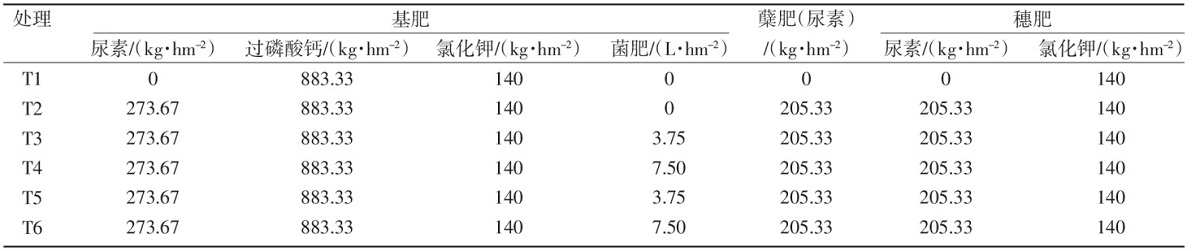
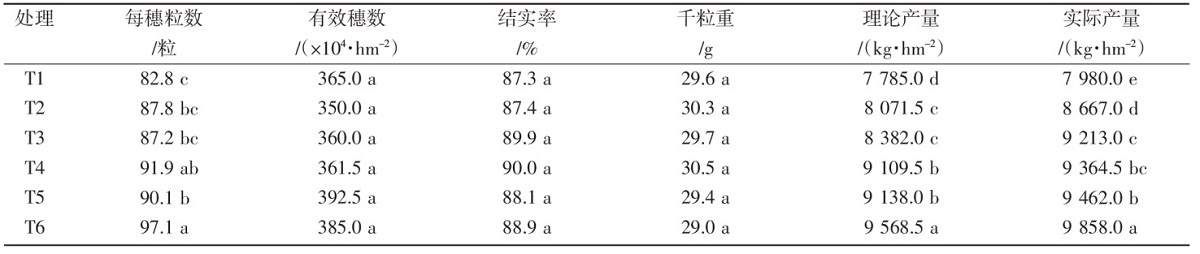
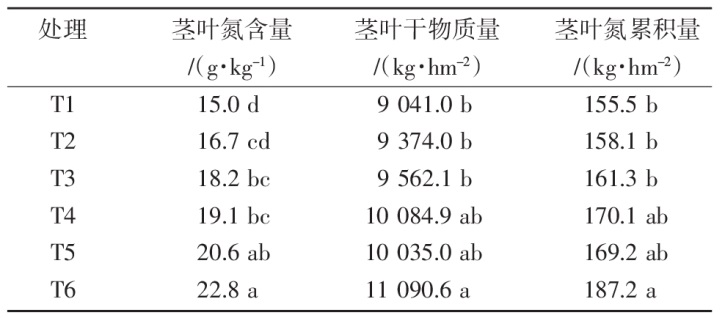
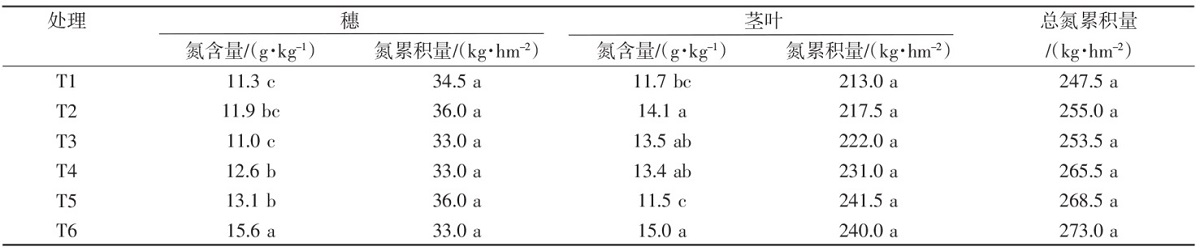
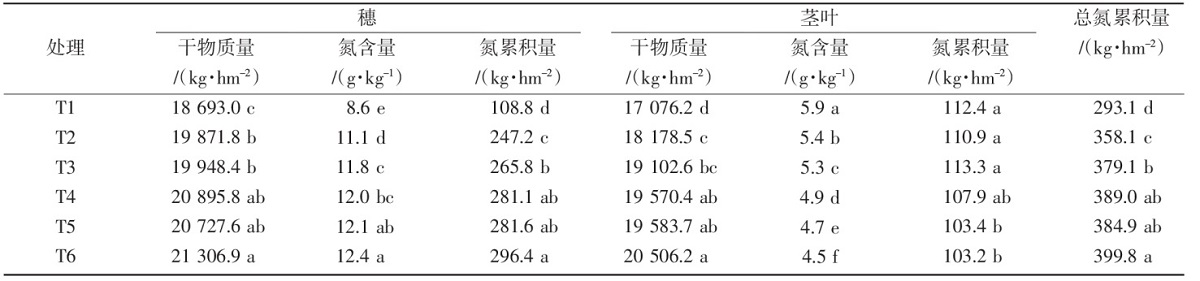
To screen suitable application modes of bio-fertilizer in rice production, this study used the late japonica rice cultivar Shanghaishida 19 as the test material and conducted field plot experiments to systematically investigate the effects of different bio-fertilizer application methods on rice yield, nitrogen accumulation and translocation, and nitrogen use efficiency(NUE). Six fertilization treatments were designed: T1, no nitrogen control; T2, conventional nitrogen application (pure N 225 kg/hm2); T3, T2 + foliar spraying of bio-fertilizer at 3.75 L/hm2 at the 2-leaf-1-heart stage of seedlings; T4, T2 + foliar spraying of bio-fertilizer at 7.5 L/hm2 at the 2-leaf-1-heart stage of seedlings; T5, T2 + root-dipping with bio-fertilizer at 3.75 L/hm2 before transplanting; and T6, T2 + root-dipping with bio-fertilizer at 7.5 L/hm2 before transplanting. The results showed that, compared with T2, co-application of bio-fertilizer significantly increased rice yield. Among these, treatment T6 achieved the highest yield, reaching 9 858.0 kg/hm2, representing a significant increase of 13.74% over T2, and its grains per panicle (97.1 grains) were significantly higher than those of other treatments (P<0.05). T6 also significantly increased stem-leaf nitrogen content and nitrogen accumulation at the tillering peak stage, panicle nitrogen content at the full heading stage, panicle nitrogen accumulation at maturity, and total plant nitrogen accumulation, while effectively reducing stem-leaf nitrogen retention rate. Regarding nitrogen use efficiency, the nitrogen recovery efficiency (47.40%), nitrogen agronomic efficiency (8.34 kg/kg), and nitrogen partial factor productivity (43.81 kg/kg) of T6 were significantly higher than those of T2 by 64.01%, 171.66%, and 13.73%, respectively. In conclusion, based on conventional nitrogen application, root-dipping with bio-fertilizer at 7.5 L/hm2 (diluted 5 times) before rice transplanting can effectively promote nitrogen accumulation in the early growth stage and its translocation to panicles, synergistically enhance rice yield and nitrogen use efficiency. This model is suitable as a bio-fertilizer application technology for promotion and application in green rice production.

Key words: rice, bio-fertilizer, application method, grain yield, nitrogen use efficiency

摘要:

为筛选生物菌肥在水稻生产中的适宜施用模式,本研究以晚粳稻品种上师大19为材料,通过大田小区试验,系统探究不同生物菌肥施用方式对水稻产量、氮素积累与转运及氮肥利用率的影响。试验设6个处理:T1,不施氮对照;T2,常规施氮,纯N 225 kg/hm2;T3,T2+秧苗2叶1心期叶面喷施菌肥3.75 L/hm2;T4,T2+秧苗2叶1心期叶面喷施菌肥7.5 L/hm2;T5,T2+移栽前根系蘸根施用菌肥3.75 L/hm2;T6,T2+移栽前根系蘸根施用菌肥7.5 L/hm2。结果表明,与T2处理相比,配施生物菌肥可显著提高水稻产量。其中,T6处理产量最高,达9 858.0 kg/hm2,较T2处理显著增产13.74%,且其每穗粒数(97.1粒)显著高于其他处理;T6处理还能显著提升分蘖盛期茎叶氮含量与氮累积量、齐穗期穗氮含量、成熟期穗氮累积量及整株氮累积量,并有效降低茎叶氮滞留率;在氮肥利用率方面,T6处理的氮回收利用率(47.40%)、氮农学利用率(8.34 kg/kg)和氮肥偏生产力(43.81 kg/kg)较T2处理分别显著提高64.01%、171.66%和13.73%。综上,在常规施氮基础上,于水稻移栽前加施7.5 L/hm2(稀释5倍)生物菌肥蘸根处理,可有效促进生育前期氮素积累及其向穗部的转运,协同提升水稻产量与氮素利用效率,该模式适宜作为水稻绿色生产的生物菌肥施用技术推广应用。

关键词: 水稻, 生物菌肥, 施用方式, 产量, 氮素利用率

CLC Number: